
Rolling backpacks for school are wheeled school bags designed to transport books, supplies, and personal items without requiring children to carry the full weight on their backs. As school materials become heavier, many families look for ways to reduce daily strain and improve comfort for growing students.
This article explores how heavy school bags affect children, when rolling backpacks make sense, key features to consider, common buying mistakes, and how parents can make practical long-term decisions for everyday school use.
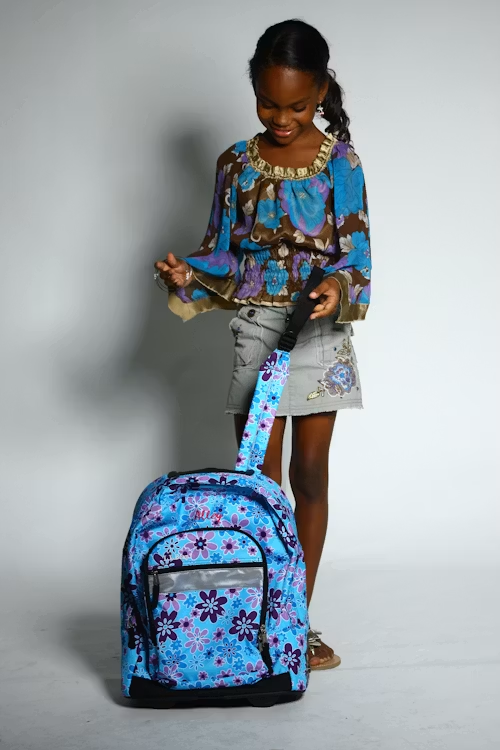
Why Heavy School Bags Can Create Daily Challenges?
Many students carry textbooks, notebooks, lunch containers, electronics, and extracurricular supplies throughout the school day. While a standard backpack may seem manageable at first, the cumulative weight can create discomfort when carried for extended periods.
How Excess Weight Affects Posture?
Excessive backpack weight can encourage children to lean forward, round their shoulders, or alter their walking patterns. Over time, this can contribute to muscle fatigue and discomfort, particularly during periods of rapid growth.
Parents often notice:
- Shoulder soreness
- Neck discomfort
- Lower back fatigue
- Difficulty maintaining posture
- Complaints after walking long distances
Common Signs A Backpack Is Too Heavy
A child may be carrying too much weight if they frequently struggle to lift the backpack, complain about shoulder pressure, or develop red marks from straps.
Students carrying multiple textbooks often benefit from solutions similar to best rolling backpack for kids for heavy school loads because weight management becomes a daily concern.
Heavy loads become even more problematic when students must move between multiple classrooms throughout the day.
While reducing weight helps, choosing the right carrying method can make an even bigger difference.
When Rolling Backpacks Become A Better Alternative?
Rolling backpacks can be especially useful when the weight or carrying distance makes a traditional backpack uncomfortable. Their practical value depends on the child’s age, daily school routine, campus layout, and the surfaces they regularly need to navigate.
Age Groups That Benefit Most
Younger students often benefit significantly because they generally have smaller frames and less physical strength than older children.
Many parents evaluating the best rolling backpack for kids for younger students focus on maneuverability because younger children often struggle with oversized school bags.
Elementary school students who carry classroom supplies, library books, and lunch bags often find rolling options easier to manage.
Situations Where Wheels Make Sense
Rolling backpacks are particularly useful when:
| Situation | Benefit |
| Large school campuses | Less carrying distance |
| Heavy textbook requirements | Reduced shoulder strain |
| Travel between activities | Easier transportation |
| Airport and family travel | Multi-purpose convenience |
| Long walking routes | Improved comfort |
However, wheels may not be ideal in schools with numerous stairs or uneven outdoor surfaces.
Understanding where and how the backpack will be used remains an important part of selecting the right model.
Important Features That Improve Comfort
Comfort in a rolling backpack depends on how easily the bag moves, how well the student can control it, and how efficiently supplies are organized inside. Evaluating the wheel system, handle design, weight distribution, and storage layout can help identify models that are easier to use every day.
Wheel Systems And Handle Design
Large, durable wheels generally roll more smoothly than smaller wheels. High-quality telescoping handles also improve control and comfort.
Parents figuring out how to choose rolling backpack for kids often discover that wheel quality matters just as much as storage capacity.
Key considerations include:
- Reinforced wheel housings
- Smooth telescoping handles
- Comfortable grip materials
- Stable rolling performance
- Durable frame construction
Weight Distribution And Storage Layout
Well-organized compartments help distribute weight more evenly. A thoughtful layout prevents supplies from shifting excessively while the backpack is in motion.
Features that improve organization include:
- Multiple compartments
- Dedicated laptop sleeves
- Side water bottle pockets
- Front accessory pockets
- Internal dividers
Good organization often reduces unnecessary bulk and makes daily packing easier.
Comfort, however, is only one piece of the decision process.
Mistakes Parents Make When Choosing School Bags
Choosing a school bag based on appearance or storage space alone can lead to problems once it enters daily use. Considering the child’s school environment, handling needs, and the backpack’s practical design can help parents avoid purchases that become inconvenient or difficult to maintain.
Prioritizing Appearance Over Function
Children naturally gravitate toward colors, patterns, and favorite characters. While design matters, functionality should remain the priority.
Wheel durability, handle construction, storage layout, and overall weight frequently have a greater impact on long-term satisfaction than visual styling.
Ignoring School Environment Limitations
Not every school environment is equally suitable for rolling backpacks.
Factors worth evaluating include:
- Stair frequency
- Locker availability
- Hallway congestion
- Classroom storage space
- Outdoor walking surfaces
Proper wheel care and handling remain important because safety, maintenance, and daily use best practices directly influence long-term performance.
Choosing a backpack that matches the student’s actual environment usually leads to better results than selecting solely based on appearance.
Once functionality is addressed, families can focus on overall value.
Balancing Convenience, Durability, And Cost
The best long-term choice should provide useful features without adding unnecessary weight, complexity, or replacement costs. Comparing durability, everyday convenience, and the student’s actual needs can help families determine which features justify the investment.
Long-Term Value Considerations
Higher-quality models often feature:
| Feature | Long-Term Benefit |
| Reinforced wheels | Reduced replacement needs |
| Strong zippers | Better durability |
| Durable fabrics | Improved wear resistance |
| Metal handle systems | Longer lifespan |
| Organized compartments | Better usability |
While premium models cost more initially, they may offer better value over several school years.
What Families Should Prioritize
Before purchasing, parents should evaluate:
- Student age and size
- Daily load requirements
- School layout
- Travel needs
- Durability expectations
Families who travel frequently often appreciate characteristics associated with the best rolling backpack for kids for travel flexibility, especially when switching between airports and classrooms.
The ideal backpack balances comfort, storage, durability, and practicality without becoming unnecessarily heavy.
With these comfort, durability, and usability factors considered, a few common questions can help clarify when rolling backpacks are a practical choice for school-age children.
FAQs About Rolling Backpacks For School
Parents considering rolling backpacks often have questions about age suitability, school policies, durability, and how these bags compare with traditional backpacks. These answers address the most common practical concerns when deciding whether a rolling design fits a child’s school routine.
Are rolling backpacks better for kids than regular backpacks?
They can be. Rolling backpacks reduce the amount of weight carried on the shoulders, making them beneficial for students with heavier school loads.
What age is appropriate for a rolling backpack?
Many elementary and middle school students can successfully use rolling backpacks, especially when carrying books and supplies regularly.
Do rolling backpacks last as long as traditional backpacks?
Quality models often do. Durability largely depends on wheel construction, handle strength, materials, and daily usage conditions.
Are rolling backpacks allowed in most schools?
Most schools allow them, but some have restrictions due to hallway congestion or storage limitations. Checking school policies is recommended.
What is the most important feature to look for?
Wheel quality is often one of the most important factors because it directly affects ease of use, stability, and long-term durability.
Understanding these practical considerations can help families decide whether a rolling backpack offers the right balance of comfort, mobility, and durability for everyday school use.
Final Verdict
Rolling backpacks provide a practical solution for students who regularly carry heavy school supplies. By reducing shoulder strain, improving mobility, and offering organized storage, they can make everyday school routines more comfortable. Choosing a model that matches a child’s age, school environment, and carrying needs will usually deliver the best long-term results.