
A best screen protector for iPhone 17 Pro Max is a protective layer—typically tempered glass or film—designed to shield your display from scratches, cracks, and daily wear. Choosing the right iPhone 17 Pro Max screen protector directly affects clarity, touch sensitivity, and long-term device condition.
Without proper protection, even minor drops or pocket debris can damage the screen, leading to costly repairs. This guide compares top options, features, and performance factors to help you select a screen protector for iPhone 17 Pro Max that balances durability, usability, and value.
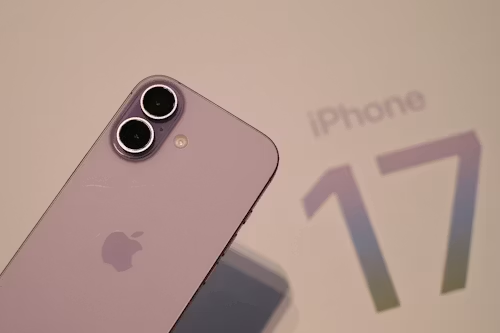
Key Takeaways
Choosing the right screen protector isn’t just about avoiding cracks—it directly affects how your phone feels and performs daily. Some options prioritize clarity, others focus on privacy or long-term durability, and each comes with trade-offs worth understanding before buying.
- Best overall protection: Spigen GlasTR EZ Fit Screen Protector — reliable clarity, easy installation, and consistent durability
- Best budget-friendly option: JETech Screen Protector — affordable without sacrificing essential scratch resistance
- Best premium experience: Belkin UltraGlass Screen Protector — superior touch response and long-term clarity
- Best privacy-focused option: ZAGG InvisibleShield Glass Elite Privacy — limits side-angle visibility without heavily affecting usability
- Best value for durability: amFilm Tempered Glass Screen Protector — strong protection with multi-pack value
These quick picks offer a fast way to narrow down your options before diving deeper into how each one performs.
Best Screen Protector For iPhone 17 Pro Max
Finding the best screen protector for a large, high-end display like the iPhone 17 Pro Max requires balancing protection with everyday usability. Not every option performs equally—some reduce glare but affect clarity, while others prioritize hardness but compromise touch sensitivity.
This comparison evaluates each option based on durability, screen clarity, touch response, installation ease, and long-term value. Insights are drawn from real user feedback, product specifications, and consistent performance across different usage scenarios. With that context in place, the next section simplifies the decision with quick, category-based picks.
Best Screen Protector For iPhone 17 Pro Max (Quick Picks)
This table highlights the strongest options based on real buying intent—whether you prioritize clarity, privacy, ease of installation, or long-term durability. Each category focuses on a specific advantage rather than overlapping benefits.
| Category | Option | Why It’s Best |
| Best Overall | Spigen GlasTR EZ Fit Screen Protector | Balanced protection, easy alignment frame, and reliable clarity |
| Best Budget | JETech Screen Protector | Affordable multi-pack with solid scratch resistance |
| Best Premium | Belkin UltraGlass Screen Protector | Enhanced touch sensitivity and long-lasting transparency |
| Best Privacy | ZAGG InvisibleShield Glass Elite Privacy | Side-angle blocking without heavy brightness loss |
| Best Value Pack | amFilm Tempered Glass Screen Protector | Multiple protectors with dependable durability |
| Easiest Installation | ESR Armorite Screen Protector | Alignment tray simplifies bubble-free application |
These picks make it easier to match your priorities before exploring each option in detail.
Best Overall Screen Protector For iPhone 17 Pro Max — Spigen GlasTR EZ Fit
The Spigen GlasTR EZ Fit Screen Protector stands out because it removes one of the biggest frustrations—installation errors—while still delivering strong, everyday protection. It’s designed for users who want a reliable, no-fuss solution that performs consistently over time.
What makes it particularly effective is how it balances clarity and durability without leaning too far in either direction. You don’t get the extreme hardness of niche protectors or the ultra-thin feel of premium glass, but you do get a stable, predictable experience that works well in most scenarios.
Key Details
| Attribute | Details |
| Material | Tempered glass |
| Hardness Rating | 9H scratch resistance |
| Installation | EZ alignment frame included |
| Clarity | High transparency with minimal distortion |
| Coating | Oleophobic anti-fingerprint layer |
Key Features / Capabilities
- Alignment tray ensures near-perfect placement
- Maintains original touch responsiveness
- Resists everyday scratches from keys and dust
- Minimal glare under normal lighting conditions
Best For
Users who want a dependable, easy-to-install protector without needing to experiment with multiple options.
Limitations
Not as thin as premium glass options. Slight fingerprint visibility under strong lighting.
Alternatives
If you want a thinner feel, consider premium glass. If budget matters more, basic multi-packs offer similar protection.
This is the kind of option you install once and rarely think about again—which is exactly what most people want.
Best Budget Screen Protector For iPhone 17 Pro Max — JETech Screen Protector
For users who prioritize cost-efficiency without sacrificing core protection, the JETech Screen Protector offers a practical solution. Budget options like this typically focus on essential durability and basic usability rather than premium coatings or ultra-thin design.
What makes this category appealing is the ability to replace protectors easily when they crack or wear out. Many budget protectors come in multi-packs, which aligns well with real-world use—since even high-quality glass is designed to absorb damage and be replaced over time.
Key Details
| Attribute | Details |
| Material | Tempered glass |
| Hardness Rating | 9H scratch resistance |
| Pack Size | عادة 2–3 pieces |
| Clarity | Good, slightly less refined than premium |
| Coating | Basic anti-fingerprint layer |
Key Features / Capabilities
- Affordable multi-pack for long-term use
- Solid protection against scratches and minor drops
- Maintains acceptable touch sensitivity
- Easy to replace when damaged
Best For
Users who want reliable protection at a low cost and don’t mind occasional replacements.
Limitations
Lower clarity and coating quality compared to premium options. Installation tools may be basic.
Alternatives
Upgrade to mid-range protectors if you want better touch feel or anti-glare performance.
For most users, this is a practical “replace-and-move-on” solution rather than a long-term premium investment.
Best Premium Screen Protector For iPhone 17 Pro Max — Belkin UltraGlass
The Belkin UltraGlass Screen Protector is designed for users who notice small differences—like smoother swiping, better light transmission, and reduced fingerprint buildup. Premium protectors focus less on raw hardness and more on preserving the original display experience.
One important consideration with newer iPhone displays is anti-reflective coating. Lower-quality protectors can interfere with this, slightly reducing brightness or clarity, while higher-end options attempt to maintain that visual quality.
Key Details
| Attribute | Details |
| Material | Advanced tempered glass |
| Thickness | Ultra-thin profile |
| Clarity | Near-original display quality |
| Coating | Advanced oleophobic + anti-reflective |
| Installation | Precision alignment tray |
Key Features / Capabilities
- Superior touch sensitivity and smooth glide
- Enhanced clarity with minimal visual distortion
- Better resistance to smudges and fingerprints
- Designed to preserve display brightness
Best For
Users who want the closest possible feel to the original screen with added protection.
Limitations
Higher cost. May not offer significantly stronger impact resistance than mid-range options.
Alternatives
If budget is a concern, mid-tier protectors offer similar protection with slightly reduced refinement.
This option is less about maximum toughness and more about maintaining the premium experience of the device.
Best Privacy Screen Protector For iPhone 17 Pro Max — ZAGG InvisibleShield Glass Elite Privacy
Privacy screen protectors serve a very specific purpose—limiting what others can see from side angles without fully compromising your own viewing experience. The ZAGG InvisibleShield Glass Elite Privacy is built for users who frequently use their phone in public spaces, where shoulder surfing becomes a real concern.
The trade-off here is subtle but noticeable. While privacy filters darken the screen slightly from off-angles, they can also reduce brightness and viewing clarity compared to standard glass. This makes them ideal in certain environments but less appealing if you prioritize visual sharpness above all else.
Key Details
| Attribute | Details |
| Material | Tempered privacy glass |
| Privacy Filter | Two-way side-angle protection |
| Clarity | Slightly reduced compared to clear glass |
| Coating | Smudge-resistant oleophobic layer |
| Installation | Alignment system included |
Key Features / Capabilities
- Blocks side-angle visibility effectively
- Maintains decent front-facing clarity
- Adds scratch and impact protection
- Reduces glare in certain lighting conditions
Best For
Users who frequently use their phone in public, offices, or travel environments where screen privacy matters.
Limitations
Reduced brightness and slight loss of clarity. Not ideal for media consumption or editing tasks.
Alternatives
Clear tempered glass options offer better display quality if privacy isn’t a concern.
If privacy is a daily concern, this trade-off becomes worthwhile despite the slight compromise in visual experience.
Best Value Pack Screen Protector For iPhone 17 Pro Max — amFilm Tempered Glass
The amFilm Tempered Glass Screen Protector focuses on long-term value by offering multiple protectors in a single pack. This approach aligns with how screen protectors are actually used—they’re replaced periodically after absorbing damage rather than lasting indefinitely.
Instead of investing heavily in a single premium protector, value packs provide consistent protection over time. This is especially useful for users prone to drops or those who prefer replacing a damaged protector immediately without worrying about cost.
Key Details
| Attribute | Details |
| Material | Tempered glass |
| Pack Size | Multi-pack (typically 3+) |
| Hardness | 9H scratch resistance |
| Clarity | High, slightly below premium tier |
| Installation | Basic alignment tools included |
Key Features / Capabilities
- Multiple protectors for extended usage
- Reliable scratch and impact resistance
- Maintains good touch sensitivity
- Cost-effective over long-term use
Best For
Users who want consistent protection over time without repeatedly purchasing new protectors.
Limitations
Coating and finish may wear faster than premium options. Installation tools are simpler.
Alternatives
Single premium protectors offer better feel and coatings but at a higher cost per unit.
This approach works best for users who view screen protectors as consumables rather than long-term accessories.
Easiest Installation Screen Protector For iPhone 17 Pro Max — ESR Armorite
The ESR Armorite Screen Protector focuses on solving one of the most common frustrations—misalignment and bubbles during installation. For many users, even a high-quality protector becomes useless if applied poorly, which is why installation systems matter more than they seem at first.
What makes this option stand out is the included alignment tray and guided application process. It reduces guesswork and ensures consistent results, even if you’ve never installed a screen protector before. This shifts the experience from trial-and-error to something closer to a one-step process.
Key Details
| Attribute | Details |
| Material | Tempered glass |
| Hardness | Reinforced impact resistance |
| Clarity | High transparency |
| Coating | Fingerprint-resistant layer |
| Installation | Full alignment tray system |
Key Features / Capabilities
- Guided installation frame for precise placement
- Bubble-resistant adhesive layer
- Maintains Face ID compatibility and clarity
- Smooth touch response with minimal friction
Best For
Users who want a quick, frustration-free installation without risking misalignment or bubbles.
Limitations
Slightly higher price compared to basic options. Installation frame adds minor bulk to packaging.
Alternatives
Standard protectors work if you’re comfortable with manual alignment, but results may vary.
For most users, ease of installation directly translates into better long-term satisfaction.
Best Screen Protector For iPhone 17 Pro Max Comparison Table
After reviewing individual options, this comparison reframes the decision around real-world use cases. Instead of broad categories, it aligns each protector with how people actually use their devices—whether for daily casual use, heavy handling, or specific priorities like privacy or budget.
| Category | Option | Key Attributes | Best For | Pricing |
| For Everyday Use | Spigen GlasTR EZ Fit Screen Protector | Balanced clarity, easy install, consistent durability | General users | Mid-range |
| For Budget Buyers | JETech Screen Protector | Affordable multi-pack, basic protection | Cost-conscious users | Low |
| For Premium Feel | Belkin UltraGlass Screen Protector | High clarity, smooth touch, refined coating | Experience-focused users | High |
| For Privacy Needs | ZAGG InvisibleShield Glass Elite Privacy | Side-angle blocking, decent clarity | Public use, office | Mid-high |
| For Frequent Replacement | amFilm Tempered Glass Screen Protector | Multi-pack, durable, cost-effective | Heavy usage users | Low-mid |
| For Easy Installation | ESR Armorite Screen Protector | Alignment system, bubble-free install | First-time users | Mid |
Best Screen Protector For iPhone 17 Pro Max For Everyday Use — Spigen GlasTR EZ Fit
For most people, the goal isn’t maximizing one feature—it’s avoiding compromises. The Spigen GlasTR EZ Fit Screen Protector fits everyday use because it delivers stable performance across all key areas without introducing noticeable drawbacks.
In real-world use, this means fewer distractions. You don’t deal with reduced brightness, awkward touch response, or frequent replacements. It’s a steady, reliable option that performs well whether you’re scrolling, typing, or using the phone outdoors.
Key Details
| Attribute | Details |
| Material | Tempered glass |
| Clarity | High transparency |
| Installation | Alignment frame |
| Coating | Anti-fingerprint |
| Durability | Consistent daily protection |
Pros & Cons
| Pros | Cons |
| Easy installation | Not the thinnest option |
| Balanced performance | Slight fingerprint visibility |
| Reliable clarity | — |
Key Features / Capabilities
- Consistent touch responsiveness
- Reliable scratch resistance for daily use
- Minimal visual distortion
Best For
Users who want a dependable, all-around option without overthinking trade-offs.
Performance / Real-World Use
It performs predictably across different conditions—indoors, outdoors, and during extended use—without requiring adjustments or replacements too frequently.
This is the “set it and forget it” option for most users.
Best Screen Protector For iPhone 17 Pro Max For Budget Buyers — JETech Screen Protector
Budget-focused buyers usually care less about premium coatings and more about basic protection at scale. The JETech Screen Protector fits this need by offering multiple protectors at a low cost, making replacement part of the strategy.
In practice, this changes how you approach damage. Instead of worrying about preserving a single protector, you simply replace it when needed. That flexibility is what makes budget options practical for many users.
Key Details
| Attribute | Details |
| Material | Tempered glass |
| Pack Size | Multi-pack |
| Clarity | Good |
| Installation | Basic tools |
| Durability | Moderate |
Pros & Cons
| Pros | Cons |
| Low cost per unit | Lower coating quality |
| Easy replacement cycle | Basic installation tools |
| Acceptable clarity | — |
Key Features / Capabilities
- Multi-pack convenience
- Basic scratch and impact resistance
- Maintains functional touch sensitivity
Best For
Users who prioritize affordability and don’t mind replacing protectors periodically.
Performance / Real-World Use
It handles everyday scratches and minor drops well, but may show wear faster, especially under heavy use or frequent cleaning.
For budget users, this is more about practicality than perfection.
Best Screen Protector For iPhone 17 Pro Max For Premium Feel — Belkin UltraGlass
For users who prioritize display quality above everything else, the Belkin UltraGlass Screen Protector fits naturally into a premium-use scenario. Instead of focusing purely on impact resistance, it emphasizes preserving the original screen experience—clarity, brightness, and smooth touch response.
In real-world use, this matters more than specs suggest. Lower-quality protectors can slightly dull colors or interfere with anti-reflective coatings, while higher-end glass maintains a cleaner, more natural look. This is especially noticeable when watching videos or using the device outdoors.
Key Details
| Attribute | Details |
| Material | Advanced tempered glass |
| Clarity | Near-original display quality |
| Coating | Anti-reflective + oleophobic |
| Thickness | Ultra-thin |
| Durability | Reinforced impact absorption |
Pros & Cons
| Pros | Cons |
| Excellent clarity | Higher cost |
| Smooth touch feel | Not the toughest option |
| Better smudge resistance | — |
Key Features / Capabilities
- Maintains display brightness and sharpness
- Smooth, responsive touch interaction
- Reduced glare compared to basic glass
Best For
Users who care about screen quality, media consumption, and overall premium feel.
Performance / Real-World Use
It feels closest to using the phone without any protector, which makes it ideal for users sensitive to visual or tactile changes.
This is less about maximum protection and more about preserving the iPhone experience.
Best Screen Protector For iPhone 17 Pro Max For Privacy Needs — ZAGG InvisibleShield Glass Elite Privacy
Privacy-focused users typically accept a trade-off—reduced clarity in exchange for better screen confidentiality. The ZAGG InvisibleShield Glass Elite Privacy is built specifically for that balance, especially in public or shared environments.
In practice, privacy protectors limit visibility from side angles, making it difficult for others to see your screen. However, they can slightly reduce brightness and sharpness, particularly indoors or at lower brightness levels.
Key Details
| Attribute | Details |
| Material | Privacy tempered glass |
| Privacy Type | Side-angle blocking |
| Clarity | Slightly reduced |
| Coating | Smudge-resistant |
| Durability | High scratch resistance |
Pros & Cons
| Pros | Cons |
| Effective privacy protection | Reduced brightness |
| Strong durability | Slight clarity loss |
| Good scratch resistance | — |
Key Features / Capabilities
- Blocks viewing angles under ~45 degrees
- Adds standard scratch and impact protection
- Maintains usability in bright environments
Best For
Users who frequently use their phone in public spaces like offices, cafes, or travel.
Performance / Real-World Use
It performs best in bright conditions, where privacy filtering is less noticeable to the user but still effective against side viewing.
For privacy-first users, the compromise in clarity is often a worthwhile trade.
Best Screen Protector For iPhone 17 Pro Max For Frequent Replacement — amFilm Tempered Glass
Some users don’t treat screen protectors as long-term accessories—they treat them as replaceable layers of protection. That’s where multi-pack options like the amFilm Tempered Glass Screen Protector make more sense than single premium units.
In real-world use, even strong tempered glass is designed to absorb impact and crack before your screen does. Replacing a damaged protector is far easier and cheaper than repairing the phone itself. Multi-pack protectors align with this logic, giving you consistent protection without worrying about cost each time one wears out.
Key Details
| Attribute | Details |
| Material | Tempered glass |
| Hardness | 9H standard protection |
| Pack Size | Typically 3–4 units |
| Clarity | High, slightly below premium |
| Installation | Basic alignment tools |
Pros & Cons
| Pros | Cons |
| Cost-effective long term | Coating wears faster |
| Easy replacement cycle | Slightly lower clarity |
| Reliable scratch protection | — |
Key Features / Capabilities
- Multi-pack design for continuous use
- Absorbs impact and prevents screen damage
- Maintains acceptable touch responsiveness
Best For
Users who drop their phone often or prefer replacing protectors regularly instead of maintaining one.
Performance / Real-World Use
It performs consistently for daily wear, but the real advantage is convenience—when one breaks, you simply replace it without hesitation.
This approach prioritizes practicality over premium finish.
Best Screen Protector For iPhone 17 Pro Max For Easy Installation — ESR Armorite
Installation quality often determines whether a screen protector performs well over time. The ESR Armorite Screen Protector is built specifically to reduce installation errors, which are one of the most common causes of poor user experience.
Modern protectors increasingly include alignment trays and anti-dust features to simplify the process. This matters because even high-quality glass can fail if applied unevenly or with trapped dust particles. Some models now include coating layers that resist fingerprints while maintaining clarity and Face ID compatibility.
Key Details
| Attribute | Details |
| Material | Tempered glass |
| Clarity | High transparency |
| Installation | Alignment tray system |
| Coating | Fingerprint-resistant |
| Compatibility | Face ID supported |
Pros & Cons
| Pros | Cons |
| Simple, guided installation | Slightly higher cost |
| Bubble-resistant adhesive | — |
| Consistent alignment results | — |
Key Features / Capabilities
- Installation frame ensures precise placement
- Reduces bubbles and dust issues
- Maintains smooth touch interaction
Best For
First-time users or anyone who wants a quick, frustration-free installation.
Performance / Real-World Use
It delivers consistent results regardless of experience level, making it one of the safest choices if installation accuracy is a priority.
This makes it ideal for users who value convenience as much as protection.
Types Of Screen Protectors For iPhone 17 Pro Max
Different types of screen protectors offer distinct experiences, and the choice isn’t always about “stronger is better.” Each type balances protection, clarity, feel, and usability differently, which makes understanding their behavior in real use more important than just looking at specs.
Tempered Glass Screen Protectors
Tempered glass is the most widely used option because it closely mimics the feel of the original screen while offering solid impact resistance. It’s designed to absorb shock and crack under pressure, protecting the actual display underneath.
- Provides strong protection against drops and scratches
- Maintains natural touch response and smooth scrolling
- Easy to install with modern alignment tools
Limitations
- Can crack and require replacement after impact
- Slightly thicker than film-based options
PET Film Screen Protectors
PET film protectors are thinner and more flexible, often used by users who prefer a nearly invisible layer on their screen. They don’t offer the same level of impact protection but work well for preventing scratches.
- Ultra-thin and lightweight
- Maintains excellent screen clarity
- Lower cost compared to glass
Limitations
- Limited drop protection
- Can feel less smooth during touch interaction
TPU Screen Protectors (Flexible Film)
TPU protectors are more advanced than basic film, offering self-healing properties that reduce the visibility of minor scratches over time. They are flexible and adapt well to curved edges.
- Self-healing surface reduces small scratches
- Flexible fit for edge-to-edge coverage
- Good for maintaining screen aesthetics
Limitations
- Slightly rubbery feel during use
- Not as impact-resistant as tempered glass
Privacy Screen Protectors
Privacy protectors are designed for specific environments where screen visibility from angles is a concern. They use built-in filters to block side viewing while keeping the front view clear.
- Protects sensitive information in public spaces
- Adds standard scratch protection
- Reduces glare in some conditions
Limitations
- Slight reduction in brightness and clarity
- Not ideal for media-heavy usage
Understanding these types makes it easier to match your choice to how you actually use your phone, rather than just choosing based on popularity.
How To Choose The Best Screen Protector For iPhone 17 Pro Max?
Selecting the right screen protector involves more than picking the most popular option. It requires understanding how different features affect real-world use, from daily handling to long-term wear.
Budget And Replacement Strategy
Your budget should reflect how you plan to use and replace the protector. Some users prefer investing once, while others choose cheaper options and replace them regularly.
Recommended:
• Best for long-term use: premium glass options like Belkin UltraGlass Screen Protector
• Best for repeat replacement: multi-pack options like amFilm Tempered Glass Screen Protector
Clarity And Display Experience
Screen clarity directly impacts how your device looks and feels. Lower-quality protectors may slightly dull colors or reduce brightness.
Recommended:
• Best for maximum clarity: high-transparency glass like Spigen GlasTR EZ Fit Screen Protector
• Best for balanced clarity and cost: mid-range options like JETech Screen Protector
Ease Of Installation
Installation quality affects both appearance and performance. Poor alignment or trapped dust can reduce usability significantly.
Recommended:
• Best for beginners: alignment-based systems like ESR Armorite Screen Protector
• Best for experienced users: standard glass protectors with manual application
Privacy Needs
If you often use your phone in public, privacy may be a priority over visual clarity.
Recommended:
• Best for privacy: specialized filters like ZAGG InvisibleShield Glass Elite Privacy
• Best for general use: clear tempered glass options without filters
Choosing based on how you actually use your phone ensures you avoid unnecessary compromises.
Quality & Performance Of Screen Protectors For iPhone 17 Pro Max
The effectiveness of a screen protector depends less on marketing claims and more on how it performs under daily pressure—touch interaction, light exposure, and accidental impact. With modern devices like the iPhone 17 Pro Max, even small differences in coating or glass quality become noticeable over time.
Design, Structure, And Material Quality
Most high-quality screen protectors use 9H tempered glass, which is engineered to absorb impact and crack before the actual display does. This sacrificial behavior is intentional—it redirects force away from the phone’s screen, reducing repair risk.
Better designs also include edge reinforcement and full-screen coverage to prevent chipping along the sides. Some advanced models add anti-static or dust-repelling layers to improve installation and longevity.
In practice, well-built protectors feel solid without adding excessive thickness, maintaining a balance between protection and usability.
Performance In Real-World Use
Daily usage reveals differences that specs alone don’t show. High-quality protectors maintain smooth touch response and resist fingerprint buildup, while lower-end ones can feel slightly sticky or dull over time.
Clarity is another key factor. Some protectors reduce brightness or interfere with anti-reflective coatings, which can make the display appear less vibrant—especially outdoors.
In real use, the best protectors are the ones you forget are there—they don’t interfere with gestures, brightness, or visibility.
Reliability And Long-Term Stability
Screen protectors are designed to degrade instead of your screen. Over time, coatings wear off, edges may lift slightly, and micro-scratches accumulate. This is expected behavior rather than a flaw.
Multi-pack options handle this better by allowing easy replacement, while premium protectors aim to extend usability with stronger coatings. The key difference is whether you prefer replacing often or maintaining one protector longer.
Safety And Impact Protection
Even with improved materials like Ceramic Shield 2, iPhone screens can still crack under direct impact. Drop tests show that front-facing impacts remain a risk despite stronger glass technology.
A screen protector acts as the first line of defense, absorbing energy and preventing direct contact with the display. This significantly reduces the likelihood of costly repairs, even if the protector itself breaks.
This makes protection less about preventing damage entirely and more about controlling how that damage occurs.
Key Features Of Screen Protectors For iPhone 17 Pro Max
Understanding the features that actually affect daily use helps avoid overpaying for specs that don’t translate into real benefits. The right features improve both protection and usability without introducing new compromises.
Tempered Glass Hardness And Impact Absorption
Hardness ratings like 9H indicate resistance to scratches from common objects such as keys or coins. However, hardness alone doesn’t guarantee durability—the real value lies in how well the glass absorbs impact.
A good protector cracks in a controlled way, dispersing force rather than transferring it directly to the screen. This behavior is what protects your device during drops.
Oleophobic Coating And Fingerprint Resistance
Modern screen protectors include oleophobic coatings to reduce smudges and make cleaning easier. Higher-quality coatings last longer and maintain a smooth surface, while cheaper ones wear off quickly.
In everyday use, this directly affects how often you need to wipe your screen and how clean it looks under bright light.
Clarity And Light Transmission
Clarity determines how closely the protector matches the original display. Premium protectors are designed to maintain brightness, color accuracy, and sharpness, while lower-quality options may slightly reduce visual quality.
This becomes especially noticeable when watching videos or using the phone outdoors, where reflections and brightness matter more.
Touch Sensitivity And Responsiveness
Touch performance is influenced by both thickness and surface quality. Thinner, well-coated glass allows smoother swiping and more accurate gesture recognition.
Poor-quality protectors can introduce slight delays or friction, which becomes frustrating over extended use.
Installation Systems And Dust Protection
Installation has evolved significantly, with many protectors now including alignment trays and dust-removal tools. These systems reduce errors and ensure consistent results.
Dust-resistant adhesive layers and guided installation frames help prevent bubbles and misalignment, which directly improves both appearance and long-term performance.
Together, these features determine whether a screen protector feels like a seamless extension of your phone—or a constant compromise.
Care, Maintenance, And Best Practices For Screen Protectors
Even the best screen protector won’t perform well if it’s poorly maintained. Over time, dust, oils, and repeated friction affect clarity and responsiveness. Proper care helps extend usability and ensures the protector continues to do its job without interfering with your screen experience.
Cleaning And Daily Care
Regular cleaning prevents buildup that can reduce visibility and touch accuracy. Fingerprints and dust particles are unavoidable, but how you clean them makes a difference in preserving coatings.
Use a microfiber cloth to wipe the surface gently, avoiding abrasive materials that can wear down the oleophobic layer. Occasional use of a slightly damp cloth or screen-safe solution helps remove stubborn smudges without damaging the coating.
Maintaining a clean surface also reduces the chances of micro-scratches caused by trapped debris during daily use.
Handling Cracks And Replacement Timing
A cracked screen protector is doing exactly what it’s designed to do—absorbing damage instead of your screen. However, once cracked, its effectiveness decreases significantly.
Small cracks may not seem urgent, but they can spread and affect touch responsiveness or visibility. Replacing the protector promptly ensures consistent protection and avoids sharp edges or weakened areas.
Regular replacement becomes even more important if you use budget or multi-pack protectors, which are designed for shorter lifecycles.
Avoiding Common Installation And Usage Mistakes
Many performance issues come from installation errors rather than product quality. Dust trapped during installation or slight misalignment can lead to bubbles, edge lifting, or reduced sensitivity.
Reapplying or replacing a poorly installed protector is often better than trying to fix it. Using alignment tools and installing in a dust-free environment improves results significantly.
Long-term performance also depends on avoiding excessive pressure or repeated impacts in the same area, which can weaken the protector over time.
Taking care of these small details ensures your screen protector remains effective rather than becoming a source of frustration.
Installation And Everyday Use Of Screen Protectors
How a screen protector is applied and used daily has a direct impact on its performance. Even high-quality glass can feel subpar if installed incorrectly or used without proper attention to alignment and cleanliness.
Preparing The Screen Before Installation
Preparation is the most critical step in achieving a clean, bubble-free result. Any dust or oil left on the screen will become trapped under the protector and remain visible.
Cleaning the screen thoroughly with a microfiber cloth and alcohol wipe ensures a smooth surface. Installing in a low-dust environment—such as a closed room—reduces the chances of particles interfering with the process.
Taking time during preparation often eliminates the need for reinstallation later.
Applying The Screen Protector Correctly
Modern screen protectors often include alignment trays or guides, which significantly simplify the process. These tools help position the protector accurately without guesswork.
Applying the protector slowly and evenly allows the adhesive layer to spread naturally, reducing air bubbles. Pressing too quickly or unevenly can trap air or create misalignment.
If bubbles appear, gentle pressure toward the edges usually resolves them, provided there’s no dust underneath.
Everyday Usage And Long-Term Handling
Once installed, a screen protector should require minimal attention during daily use. However, how you handle your device still affects its longevity.
Avoid placing the phone face-down on rough surfaces, as this can introduce micro-scratches over time. Keeping the device in a clean pocket or case reduces exposure to abrasive particles.
Over time, coatings may wear down, and replacing the protector ensures continued performance without compromising the screen experience.
With proper installation and mindful usage, a screen protector remains effective without requiring constant adjustments.
Best Screen Protector For iPhone 17 Pro Max vs Alternatives
Not every user needs a traditional tempered glass protector. Some prefer thinner films, while others rely on cases with raised edges for basic protection. Comparing these alternatives helps clarify when a dedicated screen protector is worth it—and when another approach might be enough.
| Feature | Tempered Glass Screen Protector | Alternative (Film / No Protector) |
| Impact Protection | High — absorbs shock and cracks first | Low to moderate depending on type |
| Scratch Resistance | Strong against daily wear | Basic (film) or none (no protector) |
| Clarity | High (premium models preserve display) | Very high (no layer) or slightly reduced (film) |
| Touch Feel | Smooth, glass-like | Slightly rubbery (film) or natural (none) |
| Replacement | Designed to be replaced after damage | Film lasts longer but protects less |
| Cost Approach | Moderate to recurring (replacement) | Low upfront or none |
Tempered glass remains the most balanced option because it actively protects against drops, which are the most expensive type of damage. Film protectors, on the other hand, focus more on preventing scratches than absorbing impact.
Tempered Glass Screen Protectors
Tempered glass protectors are engineered to take the hit instead of your screen. They distribute impact force across the surface and crack in a controlled way, reducing the likelihood of display damage.
In everyday use, they offer the closest feel to the original screen while adding a layer of security. The trade-off is that they are consumable—once damaged, they need replacement to remain effective.
Film Protectors Or No Protector
Film protectors (PET or TPU) are thinner and less noticeable, making them appealing for users who dislike added thickness. They work well for preventing scratches but offer limited protection against drops.
Using no protector at all provides the best visual clarity and touch feel, but it exposes the screen to direct damage. While modern iPhone glass is more durable, it’s still vulnerable to cracks under certain conditions.
For most users, tempered glass strikes the best balance between protection and usability, while alternatives serve more specific preferences.
Who Should Choose A Screen Protector For iPhone 17 Pro Max?
Not every user approaches phone protection the same way. The right choice depends on usage habits, environment, and tolerance for risk. Understanding where you fall helps narrow down the most suitable option quickly.
Everyday Users
If you use your phone casually for browsing, messaging, and media, a balanced protector is usually the best choice. You want something that protects without affecting the experience.
- Reliable protection without noticeable changes
- Minimal maintenance required
- Works well across different environments
Frequent Travelers And Public Users
For users who frequently use their phones in public places, privacy and durability become more important. Exposure to crowded environments increases both physical and visual risks.
- Added privacy in shared spaces
- Better protection during movement and travel
- Reduced risk of accidental drops
Heavy Usage Or Accident-Prone Users
If your phone is used intensively or exposed to higher risk—such as outdoor use or frequent drops—durability and replaceability matter more than premium feel.
- Multi-pack options reduce long-term cost
- Easy replacement after impact
- Consistent protection under heavy use
Minimalists Or Careful Users
Some users prefer maintaining the original feel of the screen and are confident in handling their device carefully. For them, protection may be optional or minimal.
- Maximum clarity and natural touch feel
- Lower upfront cost
- Accepts higher risk of damage
Choosing the right approach depends less on the product itself and more on how you actually use your device.
Benefits Of Screen Protectors For iPhone 17 Pro Max
Using a screen protector isn’t just about avoiding visible damage—it’s about controlling risk, maintaining usability, and extending the lifespan of your device. Even with stronger glass technology, real-world usage still exposes the screen to scratches and impact.
| Benefit | What It Means In Real Use |
| Impact Protection | Absorbs shock and cracks instead of the screen |
| Scratch Resistance | Prevents marks from keys, dust, and daily wear |
| Cost Savings | Cheaper to replace than repairing the display |
| Better Resale Value | Keeps screen condition closer to original |
| Usability Preservation | Maintains touch response and visibility |
A major advantage is how tempered glass is designed to fail safely. It cracks under pressure to absorb energy, protecting the actual display underneath.
Impact Protection And Damage Control
The most important benefit is impact absorption. When your phone drops face-down, the protector takes the hit first, reducing the force transferred to the screen.
In real situations, this often means replacing a low-cost protector instead of dealing with expensive screen repairs. Even newer displays with improved durability can still shatter under direct impact, especially during front-facing drops.
Scratch Prevention In Daily Use
Scratches don’t usually happen from major accidents—they come from everyday contact with dust, keys, or rough surfaces. Over time, even minor scratches can reduce clarity and affect how the screen feels.
A screen protector creates a buffer layer that absorbs these small abrasions, keeping the actual display clean and smooth for longer.
Cost Efficiency Over Time
Replacing a screen protector is quick and inexpensive compared to repairing a damaged display. This makes it a practical long-term strategy, especially for users who drop their phones occasionally.
Many users prefer multi-pack protectors because they allow easy replacement without additional cost each time one gets damaged.
Preserving Display Experience
High-quality protectors are designed to maintain touch sensitivity and clarity, allowing the phone to feel almost unchanged. Lower-quality ones may slightly affect brightness or smoothness, but good options minimize these differences.
However, some protectors can interfere with advanced display coatings like anti-reflective layers, which may slightly impact brightness in certain conditions.
Overall, the benefit isn’t just protection—it’s maintaining a consistent, usable experience without unexpected repair costs.
Common Myths About Screen Protectors For iPhone 17 Pro Max
Myth: Modern iPhone Screens Don’t Need Protection
Reality
Even with stronger materials, screens can still crack under impact. Protective glass is designed to absorb damage first, reducing repair risk.
Myth: All Screen Protectors Are The Same
Reality
There are major differences in clarity, coating quality, and installation systems. Premium options maintain better touch response and visibility over time.
Myth: Thicker Protectors Always Mean Better Protection
Reality
Thickness doesn’t guarantee performance. Impact absorption and material quality matter more than simply adding bulk.
Myth: Screen Protectors Ruin Display Quality Completely
Reality
Lower-quality protectors can affect brightness or clarity, but high-quality glass maintains near-original display performance with minimal compromise.
Myth: You Only Need A Screen Protector If You Drop Your Phone
Reality
Most damage comes from everyday wear like scratches, not just drops. Protectors help prevent gradual degradation as well as sudden impact damage.
These misconceptions often lead to poor decisions—either overspending or skipping protection entirely—when the right choice depends on actual usage patterns.
Common Problems Of Screen Protectors For iPhone 17 Pro Max & Their Solutions
Even well-designed screen protectors can run into issues over time, especially with daily handling and environmental exposure. Most problems aren’t defects—they’re predictable outcomes of how these protectors are used, installed, and maintained.
| Problem | Cause | Solution |
| Air Bubbles After Installation | Dust or uneven application | Reapply in a clean environment using alignment tools |
| Reduced Touch Sensitivity | Low-quality glass or thick adhesive | Choose thinner, high-quality tempered glass |
| Fingerprint Smudging | Worn oleophobic coating | Clean regularly or replace when coating degrades |
| Edge Lifting | Misalignment or case interference | Reinstall properly or switch to case-friendly design |
| Cracks Without Major Drops | Protector absorbing minor impacts | Replace promptly to maintain protection |
| Reduced Brightness | Privacy filter or low-quality clarity | Use clear high-transparency glass instead |
One of the most common frustrations is air bubbles, which usually come from dust trapped during installation. Even a single particle can prevent proper adhesion, making it difficult to fix without removing and reapplying the protector.
Touch sensitivity issues often appear in lower-end protectors where thickness or adhesive quality interferes with responsiveness. Over time, coatings also wear down, which explains why smudging increases even if the protector was initially resistant.
Cracks can seem alarming, but they’re often a sign that the protector has done its job. Replacing it quickly ensures the screen remains protected, especially after any visible damage.
Accessories And Enhancements For Screen Protectors
While a screen protector provides primary protection, additional accessories can improve performance, convenience, and longevity. These enhancements don’t replace the protector but complement it based on how you use your phone.
Alignment Frames And Installation Kits
Modern screen protectors often include alignment frames to simplify installation, but standalone kits are also available for better precision. These tools reduce human error and improve final results.
Using proper installation tools helps prevent bubbles, dust issues, and uneven placement, which directly impacts long-term usability.
- Ensures accurate positioning during application
- Reduces risk of bubbles and dust contamination
Cleaning Kits And Maintenance Tools
Regular maintenance becomes easier with dedicated cleaning kits. These typically include microfiber cloths, alcohol wipes, and dust removal stickers designed specifically for screens.
Consistent cleaning preserves clarity and extends the effectiveness of coatings, especially on higher-end protectors.
- Keeps screen clear and responsive
- Helps maintain coating performance over time
Protective Cases With Raised Edges
A good case works alongside a screen protector by reducing direct impact on the screen. Raised edges create a buffer that prevents the display from contacting flat surfaces during drops.
This combination offers more comprehensive protection than using either solution alone.
- Adds an extra layer of impact protection
- Reduces direct pressure on the screen surface
Anti-Glare And Matte Finishing Options
Some users prefer matte or anti-glare overlays to reduce reflections and improve visibility in bright conditions. These can be integrated into the protector or added separately.
While they improve visibility outdoors, they may slightly reduce sharpness compared to clear glass.
- Reduces reflections in bright environments
- Improves readability under strong lighting
These enhancements allow you to tailor your setup based on how and where you use your phone, rather than relying on a single layer of protection.
Screen Protector Trends For iPhone 17 Pro Max (2026)
Screen protector technology continues to evolve alongside smartphone displays. With newer iPhones focusing on brightness, durability, and display coatings, accessory manufacturers are adapting to preserve these improvements rather than interfere with them.
Advanced Anti-Reflective And Clarity Enhancements
Modern protectors are increasingly designed to maintain the original display’s brightness and color accuracy. Earlier models often reduced clarity slightly, but newer glass aims to minimize that gap.
This shift is especially relevant for users who consume media or use their devices outdoors, where reflections and brightness levels matter most. High-end protectors now include layered coatings that better manage light transmission and glare.
Improved Installation Systems
Installation has become a major focus area, with brands investing in alignment trays and dust-resistant application methods. These systems reduce user error and ensure consistent results.
This trend reflects real user behavior—many performance complaints come from poor installation rather than product quality. Simplified installation improves overall satisfaction and reduces returns.
Hybrid Protection Materials
Some newer protectors combine glass and flexible materials to improve impact absorption. These hybrid designs aim to reduce shattering while maintaining a smooth touch experience.
While still evolving, this approach addresses one of the main limitations of traditional tempered glass—its tendency to crack under impact.
Privacy And Specialized Use Cases
Privacy filters and matte finishes are becoming more refined, offering better balance between usability and functionality. Earlier versions often reduced brightness significantly, but newer designs aim to minimize that compromise.
This reflects growing demand for specialized solutions rather than one-size-fits-all products.
These trends show a clear direction: improving usability and experience while maintaining reliable protection.
Longevity & Long-Term Value Of Screen Protectors
The long-term value of a screen protector depends less on how long it lasts and more on how effectively it protects your device over time. Since most protectors are designed to absorb damage, replacement is part of the lifecycle rather than a failure.
Lifespan And Replacement Cycle
Most screen protectors show wear within a few months, depending on usage. Coatings degrade, micro-scratches appear, and edges may lift slightly over time.
Replacing the protector periodically ensures consistent protection and maintains screen clarity. Multi-pack options support this approach by reducing the cost of replacement.
Consistency Of Performance Over Time
Premium protectors aim to extend usability with better coatings and refined materials. They maintain clarity and smoothness longer, which can justify the higher initial cost.
Budget options, on the other hand, may require more frequent replacement but still provide effective protection in the short term.
Cost Vs Value Over Extended Use
Long-term value isn’t just about durability—it’s about how much protection you get relative to cost. A single premium protector may last longer, while multiple budget protectors provide ongoing coverage.
The right choice depends on whether you prefer fewer replacements or a lower cost per cycle.
Over time, the goal isn’t to avoid replacement—it’s to ensure your screen remains protected consistently without unnecessary expense.
This naturally leads into understanding how pricing tiers affect overall value.
Budget & Value Considerations For Screen Protectors
Choosing the right screen protector often comes down to how you balance upfront cost with long-term usability. Some options cost more initially but last longer, while others are cheaper but require more frequent replacement. Understanding this trade-off helps avoid overpaying—or underbuying.
| Tier | What You Get | Best For | Trade-offs |
| Budget | Basic tempered glass, multi-pack options | Frequent replacement users | Lower coating quality, shorter lifespan |
| Mid-Range | Balanced clarity, decent coatings, better fit | Everyday users | Moderate cost, average durability |
| Premium | Advanced coatings, better clarity, refined feel | Experience-focused users | Higher upfront cost |
Budget options are ideal if you expect to replace protectors often. They keep costs low over time but may lose clarity or smoothness faster. Mid-range protectors offer a balanced experience, making them suitable for most users who want reliability without overspending.
Premium protectors focus on preserving the original screen feel, with better coatings and clarity. They cost more initially, but for users sensitive to touch response or display quality, the difference becomes noticeable in daily use.
User Feedback & Expert Insights
Understanding how screen protectors perform in real-world use requires looking beyond specifications. User feedback highlights practical issues, while expert insights explain why those issues occur and how different products address them.
| Category | Summary |
| What Users Like | Easy installation systems, strong scratch protection, smooth touch feel |
| Common Complaints | Fingerprint buildup over time, bubbles from poor installation, reduced clarity in cheaper options |
| Expert Insights | Coating quality and installation systems have a bigger impact than thickness alone |
Users consistently value simplicity—protectors that install easily and work without constant adjustment tend to perform better overall. Many complaints are tied to installation errors rather than product flaws, which is why alignment tools and dust control matter more than expected.
Experts often point out that hardness ratings alone don’t define performance. Factors like coating durability, adhesive quality, and clarity retention play a bigger role in long-term satisfaction.
How We Selected The Best Screen Protector For iPhone 17 Pro Max?
Evaluation Criteria
- Clarity and display preservation
- Touch sensitivity and responsiveness
- Impact absorption and scratch resistance
- Installation ease and consistency
- Long-term usability and coating durability
- Overall value relative to cost
Testing And Analysis Method
Each screen protector was evaluated based on real-world usage scenarios rather than just specifications. This included assessing how they perform during daily handling, exposure to dust and fingerprints, and response to minor impacts.
User feedback was analyzed to identify recurring strengths and issues, while expert insights helped validate performance differences between budget, mid-range, and premium options. The goal was to prioritize consistent, reliable performance over marketing claims.
FAQs About Screen Protectors For iPhone 17 Pro Max
These frequently asked questions address common concerns, helping you clarify key decisions before choosing the right screen protector.
Do you really need a screen protector for iPhone 17 Pro Max?
Yes, even with stronger glass, the screen can still scratch or crack. A screen protector adds a replaceable layer that absorbs damage and preserves display condition over time.
What is the best type of screen protector for iPhone 17 Pro Max?
Tempered glass is the most balanced option, offering strong impact protection, clear display quality, and a smooth touch experience compared to film or hybrid alternatives.
Does a screen protector reduce display quality?
High-quality protectors maintain near-original clarity and brightness. Lower-quality options may slightly reduce sharpness or increase glare, especially under bright lighting conditions.
How often should you replace a screen protector?
Replace it when cracks, deep scratches, or coating wear appear. For most users, this ranges from every few months to a year depending on usage and quality.
Are expensive screen protectors worth it?
Premium protectors offer better coatings, smoother touch response, and longer-lasting clarity. They are worth it if you prioritize display experience and reduced maintenance.
Do screen protectors affect touch sensitivity?
Good-quality protectors maintain accurate touch response. Poor-quality or overly thick protectors can slightly reduce responsiveness or introduce friction during swiping.
Can a screen protector prevent screen cracks?
It cannot guarantee prevention, but it significantly reduces risk by absorbing impact. In many cases, the protector cracks instead of the phone screen.
What is the difference between privacy and clear screen protectors?
Privacy protectors limit side-angle visibility, making screens harder to view in public. Clear protectors prioritize brightness, color accuracy, and overall display clarity.
Is it better to use a case with a screen protector?
Yes, combining both provides better protection. A case reduces impact force, while the screen protector absorbs direct contact with surfaces or objects.
Do screen protectors affect Face ID or sensors?
Most modern protectors are designed to work with Face ID and sensors without interference, provided they are properly installed and compatible with the device.
How do you avoid bubbles when installing a screen protector?
Clean the screen thoroughly, use alignment tools, and apply slowly. Installing in a dust-free environment reduces trapped particles that cause bubbles.
These answers cover the most important considerations—now let’s finalize which option makes the most sense for your specific needs.
Final Verdict – Which Screen Protector For iPhone 17 Pro Max Should You Get?
The right choice depends on whether you prioritize clarity, cost, privacy, or long-term convenience.
- Choose Spigen GlasTR EZ Fit Screen Protector if you want the most balanced everyday protection with easy installation
- Choose JETech Screen Protector if you need a budget-friendly option with reliable basic protection
- Choose Belkin UltraGlass Screen Protector if display clarity and smooth touch experience matter most
- Choose ZAGG InvisibleShield Glass Elite Privacy if you frequently use your phone in public and need screen privacy
- Choose amFilm Tempered Glass Screen Protector if you prefer multi-pack value for regular replacement
- Choose ESR Armorite Screen Protector if you want a simple, error-free installation process
Make your choice based on how you actually use your phone, not just features on paper.