
Coaxial and component speakers are the two most common speaker designs used in vehicle audio systems. Each serves a different purpose, offering distinct advantages in sound quality, installation complexity, flexibility, and overall upgrade potential.
Choosing the right speaker type can dramatically affect listening enjoyment, installation costs, and future upgrade options. This guide explains the differences between coaxial and component speakers, helping drivers select the best solution for their vehicle and audio goals.
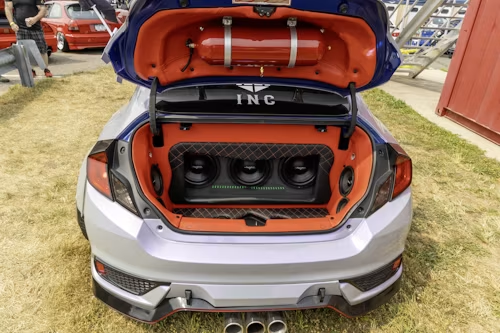
Understanding The Difference Between Coaxial And Component Speakers
The primary difference between these speaker designs is how the audio drivers are arranged.
Coaxial speakers combine multiple drivers into a single assembly. Typically, the tweeter is mounted directly in the center of the main woofer, creating a compact all-in-one solution.
Component speakers separate the woofer, tweeter, and crossover network into individual parts. This allows installers to place each component in the most effective location within the vehicle.
Many buyers researching types of car speaker brands encounter these configurations before they begin comparing manufacturers because speaker architecture significantly influences performance expectations.
Coaxial systems emphasize simplicity, while component systems prioritize customization and precision.
Understanding this distinction helps narrow upgrade choices much faster.
Why Coaxial Speakers Remain Popular?
Coaxial speakers dominate the entry-level and mid-range car audio market for several practical reasons.
Their integrated design simplifies installation, reduces wiring complexity, and lowers overall system costs. Many factory speaker replacements use coaxial designs because they fit existing mounting locations with minimal modifications.
Key advantages include:
- Easier installation
- Lower overall cost
- Factory mounting compatibility
- Excellent value for casual listeners
- Reduced installation time
For drivers seeking a straightforward upgrade without extensive vehicle modifications, coaxial speakers often provide the most practical solution.
Their convenience explains why they remain the most common upgrade path for everyday vehicles.
While simplicity is their greatest strength, sound quality improvements can still be substantial compared to factory speakers.
How Component Speakers Improve Sound Quality?
Component speakers are designed for listeners who want greater accuracy and control.
Because the tweeters are mounted separately, installers can position them closer to ear level. This improves soundstage, imaging, and stereo separation.
The dedicated crossover network also directs frequencies more precisely to each driver, allowing the system to reproduce music with greater detail.
Drivers exploring best car speaker brands for custom audio builds frequently encounter component systems because these configurations offer significantly more tuning flexibility than traditional coaxial designs.
The result is often a more immersive listening experience, especially for music enthusiasts who value realism and instrument separation.
Although installation is more involved, many audiophiles consider the performance benefits worthwhile.
Better component placement creates a more natural and engaging sound environment inside the vehicle.
Bass Performance Expectations
One common misconception is that component speakers automatically produce stronger bass than coaxial speakers.
In reality, bass performance depends on multiple factors, including:
- Speaker size
- Cone materials
- Enclosure characteristics
- Amplifier power
- Vehicle acoustics
- Subwoofer integration
Listeners researching best car speaker brands for bass lovers often discover that overall system design affects low-frequency performance far more than speaker configuration alone.
A well-designed coaxial speaker can outperform a poorly installed component system in certain situations.
Strong bass typically requires proper system balance rather than relying on speaker architecture alone.
Matching expectations to system goals helps prevent disappointing upgrade results.
Installation Complexity And Cost Comparison
Installation requirements vary significantly between the two speaker types.
| Factor | Coaxial Speakers | Component Speakers |
| Installation Difficulty | Low | Moderate To High |
| Wiring Complexity | Minimal | Higher |
| Mounting Requirements | Simple | More Extensive |
| Tuning Flexibility | Limited | Extensive |
| Typical Cost | Lower | Higher |
Component systems often require additional mounting locations, crossover placement, and more careful tuning.
As a result, professional installation costs may increase substantially.
However, enthusiasts who value customization often consider the additional effort worthwhile.
Installation requirements should always be considered alongside performance goals before making a purchase decision.
Which Speaker Type Fits Different Drivers?
The best choice depends largely on how the vehicle is used and what the owner expects from the system.
Coaxial speakers are often ideal for:
- Daily commuters
- Budget-conscious buyers
- Factory stereo upgrades
- Simple DIY installations
- Casual music listeners
Component speakers are often ideal for:
- Audio enthusiasts
- Competition systems
- Dedicated music lovers
- Advanced custom installations
- Future expansion projects
Choosing based on actual listening habits usually produces better long-term satisfaction than selecting the most expensive option available.
Personal priorities should guide every upgrade decision.
Different drivers naturally benefit from different approaches.
Coaxial Vs Component Speakers In The Real World
In everyday driving situations, the difference may not always be dramatic.
Traffic noise, road surfaces, engine vibration, and cabin acoustics can limit how much performance listeners actually perceive. This is why discussions surrounding car speaker brands vs alternatives often focus on whether upgrading speakers alone provides sufficient improvement compared to investing in amplifiers, sound deadening, or complete system replacements.
For many drivers, upgrading factory speakers with quality coaxials delivers an excellent balance of cost and performance.
For dedicated enthusiasts, component systems typically unlock greater long-term potential.
Understanding how the vehicle is actually used helps determine where investments should be prioritized.
Real-world listening conditions matter just as much as technical specifications.
Avoiding Common Speaker Upgrade Mistakes
Many disappointing upgrades result from installation errors rather than speaker quality.
Common issues include:
- Incorrect polarity connections
- Poor mounting stability
- Improper crossover placement
- Insufficient amplifier matching
- Lack of sound treatment
Several of these issues frequently appear among common problems of car speaker brands & their solutions because even premium speakers cannot perform properly when installation fundamentals are overlooked.
Taking time to plan the installation carefully often produces bigger improvements than spending more money on equipment alone.
Proper setup maximizes performance regardless of speaker type.
Attention to detail remains one of the most valuable upgrades available.
Understanding these installation and performance factors can help drivers make more informed decisions when choosing between coaxial and component speaker systems.
FAQs About Coaxial and Component Speakers
Choosing between coaxial and component speakers often depends on installation requirements, budget, sound quality expectations, and future upgrade plans. The following questions address some of the most common considerations drivers have when comparing these two speaker designs.
Are component speakers always better than coaxial speakers?
No. Component speakers generally offer greater accuracy and customization, but quality coaxial speakers can provide excellent performance for many drivers.
Are coaxial speakers easier to install?
Yes. Their all-in-one design typically requires less wiring and fewer modifications than component speaker systems.
Do component speakers need an amplifier?
Not always. However, many component systems perform best when paired with dedicated amplification.
Which speaker type is better for beginners?
Coaxial speakers are usually better for beginners because installation is simpler and costs are typically lower.
Is the sound quality difference noticeable?
Yes, especially for listeners who value imaging, detail, and soundstage performance. Casual listeners may notice a smaller difference.
These differences show why neither speaker design is automatically the best choice for every vehicle. Matching the speaker type to listening preferences, installation requirements, and budget can provide a more satisfying and practical audio upgrade.
Final Verdict
Coaxial and component speakers both serve valuable roles in car audio systems. Coaxial speakers offer simplicity, affordability, and strong everyday performance, while component speakers deliver greater precision and customization opportunities. The best choice depends on budget, installation preferences, and long-term audio goals rather than a single universal recommendation.